
Why Nickel Alloys are the Gold Standard for Sour Service in Oil & Gas (2026 Update)
Introduction: The Hostile Frontier of 2026
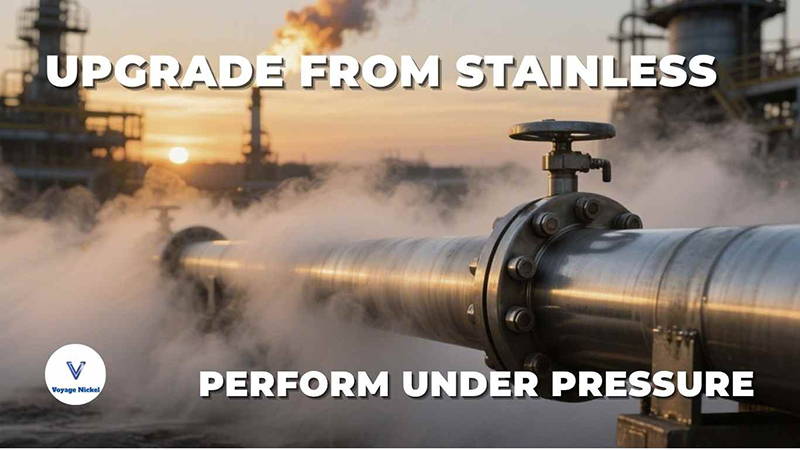
As the global hunger for energy pushes exploration into “Ultra-Deepwater” basins (3,000m+) and “Extreme HPHT” (High-Pressure, High-Temperature) reservoirs, the limits of conventional metallurgy have been reached. In these wells, bottom-hole pressures routinely exceed 20,000 PSI, and temperatures soar above 200°C. However, the presence of Hydrogen Sulfide (H₂S), Carbon Dioxide (CO₂), and dense Chlorides creates a chemical “perfect storm” known as Sour Service.
In 2026, nickel-base alloys are no longer an expensive upgrade; they are a survival requirement. At Voyage Nickel, we provide the mission-critical alloys that keep the world’s most complex offshore assets flowing safely, profitably, and sustainably.
Defining the Threat: The Chemistry of a Sour Well
The severity of a sour well is dictated by the Partial Pressure of Hydrogen Sulfide.
pH₂S = Ptotal × mol% H₂S
According to NACE standards, any environment where the pH₂S exceeds 0.05 psia is officially “Sour Service.” In 2026′s deepest wells, we are seeing partial pressures hundreds of times this limit. This toxic gas doesn’t just corrode the surface; it attacks the atomic structure of the metal.

Combating the “Silent Killers”: SSC and Cl-SCC
In the Oil & Gas industry, the true threats are unpredictable, catastrophic cracking modes:
Sulfide Stress Cracking (SSC): When H₂S reacts with steel, it releases atomic hydrogen. These tiny atoms migrate into the metal lattice, creating internal pressure and sudden, brittle failure. High-nickel alloys possess a Face-Centered Cubic (FCC) atomic structure, which naturally resists hydrogen migration, effectively neutralizing the risk of embrittlement.
Chloride Stress Corrosion Cracking (Cl-SCC): In high-salinity seawater at elevated temperatures, standard stainless steels crack rapidly under stress. Alloys with >42% Nickel (like Inconel 625/825) exhibit complete immunity to Cl-SCC, making them essential for risers and subsea flowlines.
The Regulatory Shield: NACE MR0175 / ISO 15156 Compliance
In 2026, regulatory compliance is the ultimate barrier against billion-dollar liability. Every piece of metal Voyage Nickel ships is audited against NACE MR0175/ISO 15156.
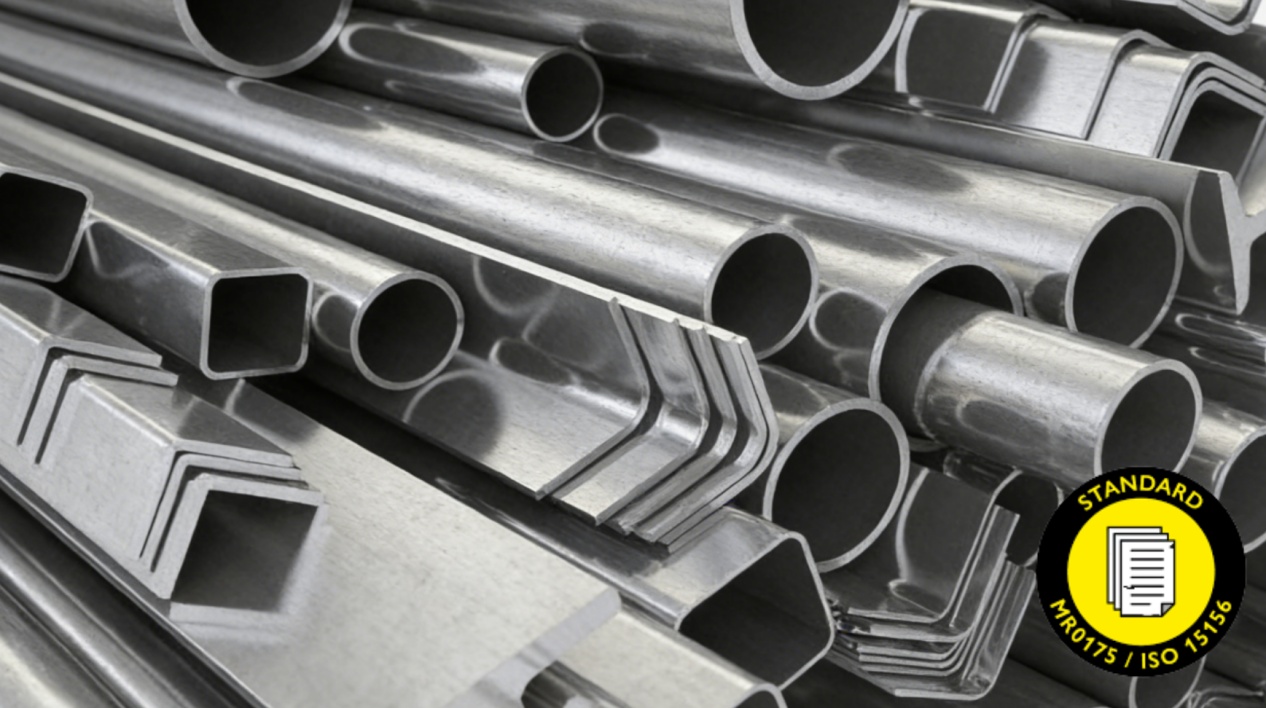
The Hardness Constraint: NACE strictly limits material hardness to prevent SSC. For Inconel 718, this means specialized heat treatment cycles to cap hardness at 40 HRC max (or 35 HRC for maximum severity environments).
The Voyage Assurance: We provide full 3.1 MTCs and 3.2 Third-Party Witness Inspections (e.g., DNV, ABS, Lloyd’s) to ensure your project meets the highest global safety benchmarks. We maintain a digital ledger of every melt, ensuring 100% traceability for offshore insurers.
Strategic Alloy Mapping for 2026 Offshore Projects
| Application / Component | Recommended Alloy | Technical Rationale for Sour Service |
| Subsea Christmas Trees (Valves) | Inconel 625 (Cladding) | Protects valve bodies from sand erosion and saltwater pitting. |
| Downhole Hangers & Packers | Inconel 718 | High yield strength (120 ksi+) required for HPHT stability. |
| Deep-Well Tubulars | Incoloy 925 | Cost-effective hardened alloy for downhole completion tools. |
| Heat Exchangers | Hastelloy C276 | Ultimate resistance where both H₂S and aggressive acids are present. |
| Flowlines & Risers | Incoloy 825 | Excellent cost-to-performance for long-distance corrosion protection. |
| Marine Fasteners | Monel K500 | Non-magnetic and resistant to bio-fouling in seawater. |
The ROI of Corrosion Resistance: A Lifecycle Cost (LCC) Analysis
Procurement departments often focus on the upfront CAPEX—the price per kilogram. As experts, we encourage the Total Lifecycle Cost (LCC) approach.

No Chemical Inhibition: Nickel alloys eliminate the need for millions of dollars in corrosion inhibitor chemicals injected downhole over the well’s life.
No Unplanned Interventions: A single subsea intervention in 2026 can cost $1.5M per day. If an Inconel 625 component prevents just one failure in 30 years, it has paid for itself 1,000 times over.
The Math of Success: For a typical $500M offshore development, using premium nickel alloys adds roughly 5% to the total CAPEX but reduces the OPEX (Operating Expenditure) by 40% over 20 years.
Sustainability and the “Circular” Nickel Economy
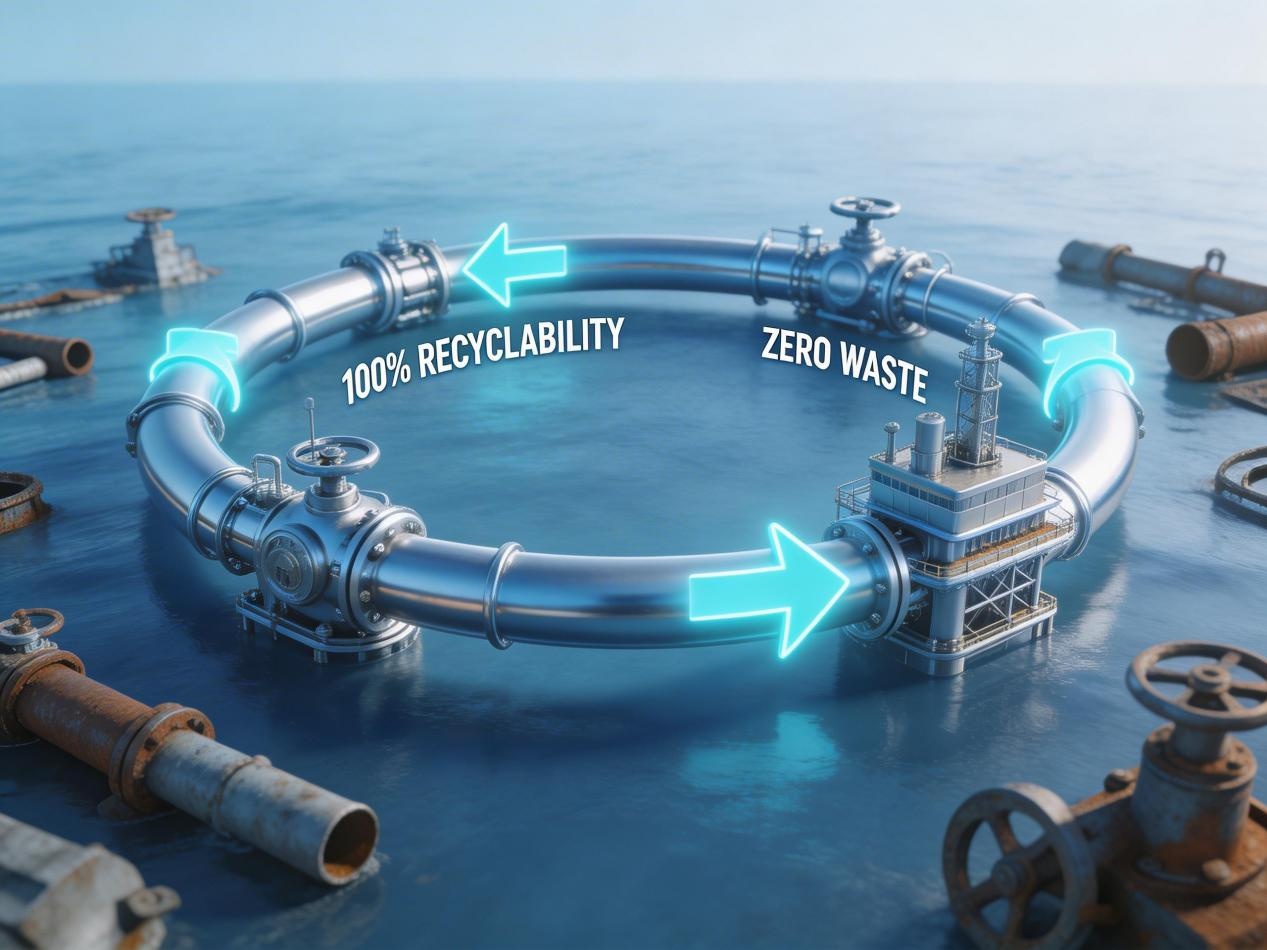
In the 2026 global energy landscape, ESG scores are critical. Nickel alloys are 100% recyclable and significantly reduce the environmental impact of frequent replacement. By specifying Voyage Nickel, you are investing in a “One-and-Done” installation that reduces waste and ensures infrastructure longevity.
Case Study: Deepwater Horizon Prevention
Modern safety valves made from Inconel 718 (certified to API 6A and NACE) are the last line of defense in the Gulf of Mexico. Our material ensures that even in the most corrosive “Shut-In” conditions, the valve seals remain functional, preventing environmental catastrophes and protecting the company’s reputation.
Conclusion: Partnering for Global Energy Security
Operating in deepwater sour service leaves zero margin for error. As a premier subsidiary of the Voyage Global Metal Group, we don’t just supply metal; we supply the armor that protects your personnel and your profitability. From the Norwegian Continental Shelf to the Middle Eastern gas fields, our NORSOK-approved and NACE-certified supply chain is built for the most demanding QA/QC protocols on the planet.
Secure Your Offshore Supply Chain: Download our 2026 Capability Statement for Oil & Gas or request a sample for metallurgical testing. Contact Voyage Nickel Co., Ltd. – Your Technical Partner in High-Performance Alloys.
Post time: Apr-16-2026